Showing posts with label - General Motors. Show all posts

June 16, 2010

Opel Rekord

A little history

During its whole history – thirty-three years – the Rekord always stood near the top of Opel’s range. Interestingly, though passing through many different generations, the Rekord featured for most of its life bodies that were insistingly looking at the other side of the Atlantic Ocean for inspiration, not only owning up to the American ownership of Opel, but also expressing the tastes of many European motorists of the time.

Born as a two-door saloon in March 1953, but also available as a convertible or an estate, the Rekord, or rather the Olympia Rekord as it was then called, was initially powered by a 1.5-litre four. Though this first Rekord had a short career which ended in mid-1957, it passed through several facelifts and, although it looked at first as a scaled-down Pontiac, it was not so easily identifiable with other GM products at the time it retired.

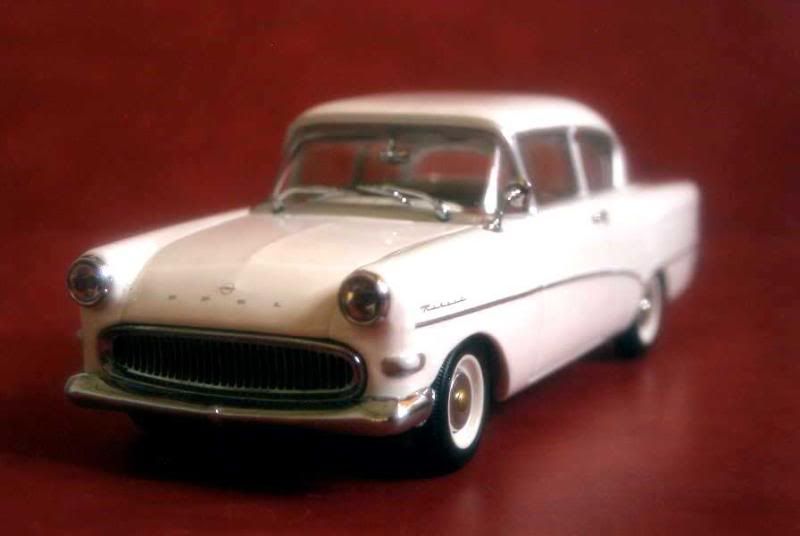
The second-generation Rekord (P1) gave up the “Olympia” name, relinquishing any affiliation with its predecessor. It also appeared even more Americanized, as it now enjoyed two-tone paints, wraparound windshields and small fins at the rear. Such gimmicks would rapidly become obsolete, so this car’s life was even shorter than the Olympia Rekord’s, ending after only three years. Its successor was the P2, which was basically a re-bodied P1. The P2 was much squarish, and did away with wraparound windshields and curved side mouldings. Actually, the P2 had been designed to resemble the larger Kapitän, Opel’s offer in the luxury field. Though wheelbase was unchanged, the P2 also saw the introduction of the first four-door Rekord saloon, a welcomed addition.

Generations of Rekord continued to succeed each other at a rapid pace. In March 1963, the new Rekord “A” introduced a new style which, this time, did away with the Kapitän connection. Still, the link was soon re-established, as in March 1964 the Rekord, as a sign of the increasing fortune of the German middle class, was offered with an optional 2.6-litre six lent by Opel’s upper range. From July 1965 a facelifted Rekord “B” had a very short career (eleven months) but, significantly, introduced rectangular headlights – another styling cue borrowed from the latest Kapitän – which replaced the traditional round ones, and was at last powered by brand-new engines.

The Rekord “B” prefigured its successor’s style, though the straight horizontal lines that characterized American design during the early Sixties now gave way to the new “Coke bottle” styling gracing the “C”. Another American touch, a semi-fastback coupe was introduced, as well as a trendy vinyl roof. Separating the wheat from the chaff, Opel set up a new series, christened Commodore, for the six-cylinder cars. A symbol of the growing success of this German product, the “C” was also built in many countries abroad and, more specifically for our Brazilian friends, was the basis for one of their most ironic cars, the Chevrolet Opala, which would still be in production years after the very name Rekord would have disappeared.

Entering production in August 1971, the Rekord “D” marked a milestone as the car’s simpler body finally started to escape the influence of American styling that, having become too excessive and extravagant, was no longer en vogue in Europe. It also saw the introduction of the range’s first diesel engine, a 2.1-litre four.

The first Rekord fitted with a purely European body was the “E”, introduced in August 1977. Today, it can appear a little boxy, but was perfectly up-to-date back then. Furthermore, in order to face the threat of two futuristic models about to be launched by its rivals, the Audi 100 and the Ford Sierra, Opel’s designers cleverly facelifted the “E” in August 1982, successfully extending its lifespan up to July 1986. Once again the Rekord was available as a six-cylinder Commodore but also, as the slow-selling six- and V8-powered Opel behemoths had been sacrificed on the altar of economy shortly after the beginning of the oil crisis, as two new models: the luxurious Senator and its coupe variant, the Monza.

The Rekord nameplate was finally the victim of its own success. Feeling that “Rekord” (or, as a matter of fact, “Kadett”) sounded too much German for cars now sold worldwide, Opel decided to call its new middle-range car, introduced for model year 1987, the Omega. Still, nearly a quarter of a century later, I can’t help missing the old name.

An additional note

I wrote this post last week while scheduling to make it viewable today; coincidentally, two days ago our friend Tohmé published a post of his own featuring two very nice Opel Commodore racing cars on his blog - if you did not visit this page up to now, they are worth having a look.

About the models

There are plenty of them considering the long career of the Rekord, but unfortunately there would still be a long way if I’d decide to complete all generations of the car.

Model: Opel Rekord
Year: 1958
Maker: Minichamps
Scale: 1/43
Distributed by: Minichamps, limited edition - 1,008 pieces
Acquired: brand new, in February 2006, in Manila, Philippines

Very nice P1 by Minichamps: 15/20.
Photobucket

Photobucket

Photobucket

Photobucket

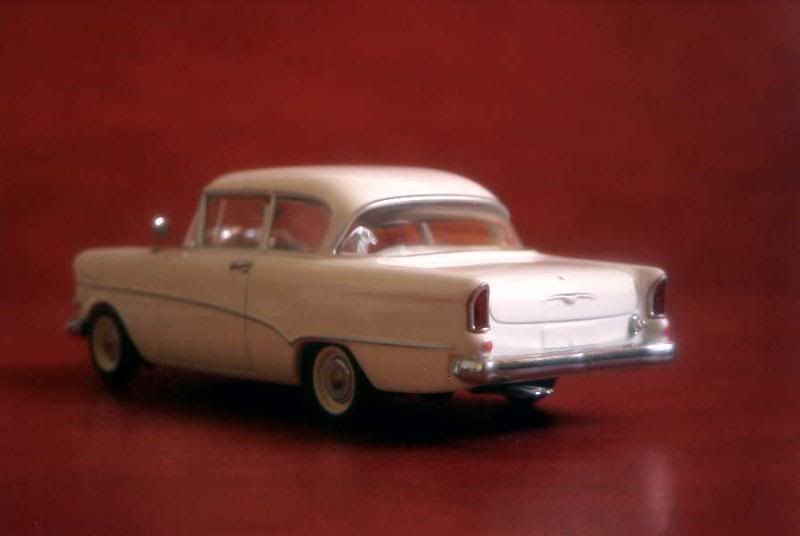
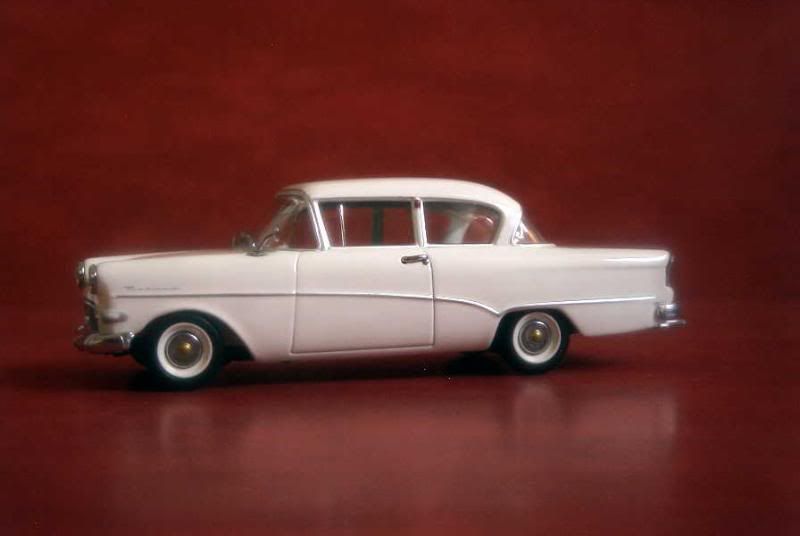
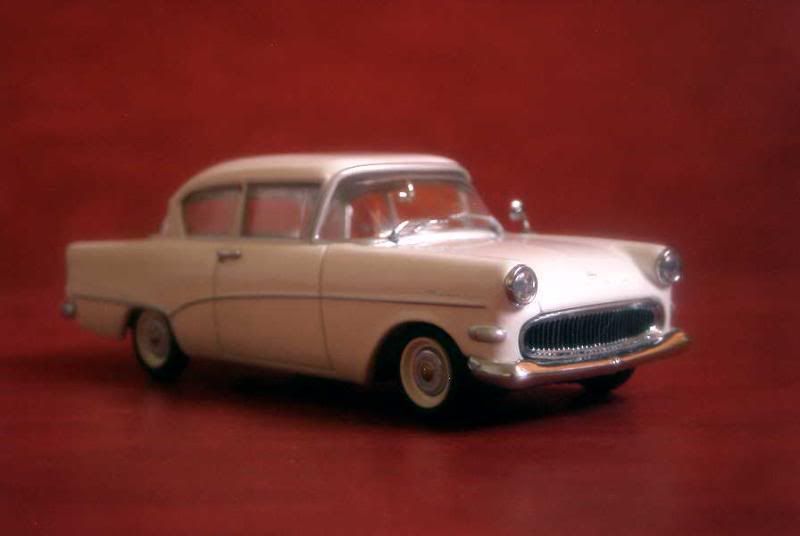
Model: Opel Rekord
Year: 1960
Maker: Minichamps
Scale: 1/43
Distributed by: Minichamps, limited edition - 3,024 pieces
Acquired: brand new, in February 2006, in Manila, Philippines

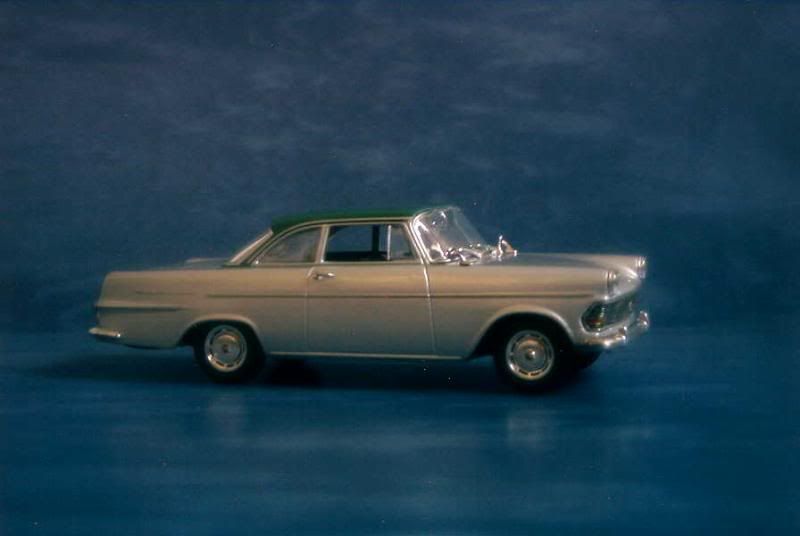
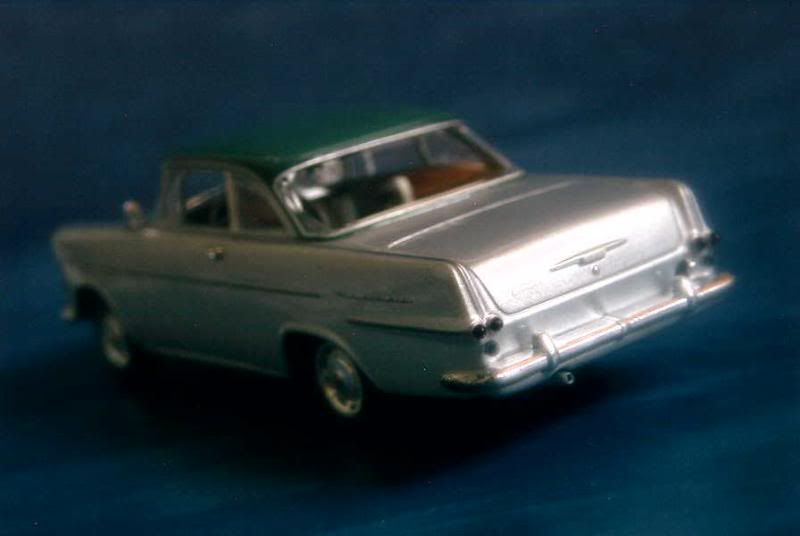
The best source of vintage German cars in 1/43 scale, Minichamps unsurprisingly also proposes this P2 coupe. My rating is again 15/20.
Photobucket

Photobucket

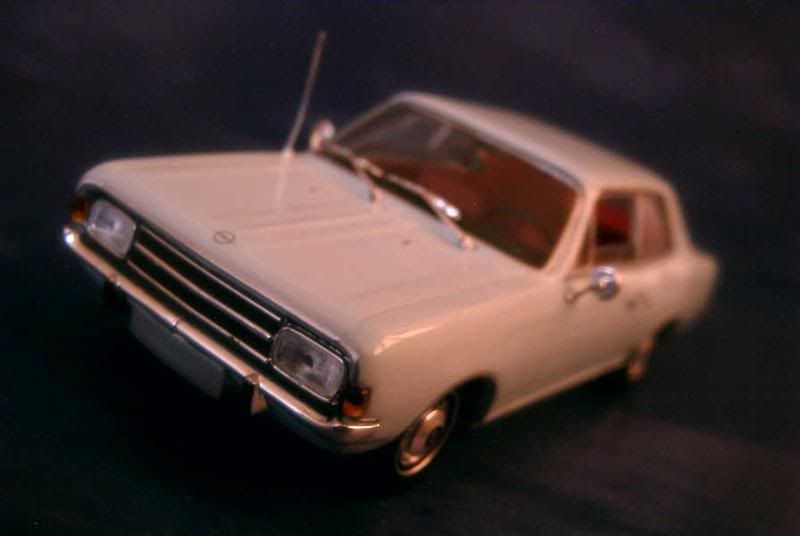
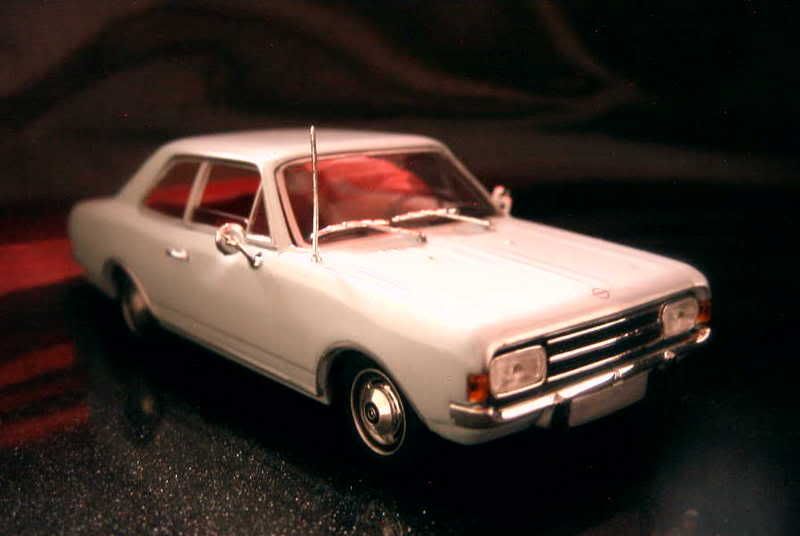
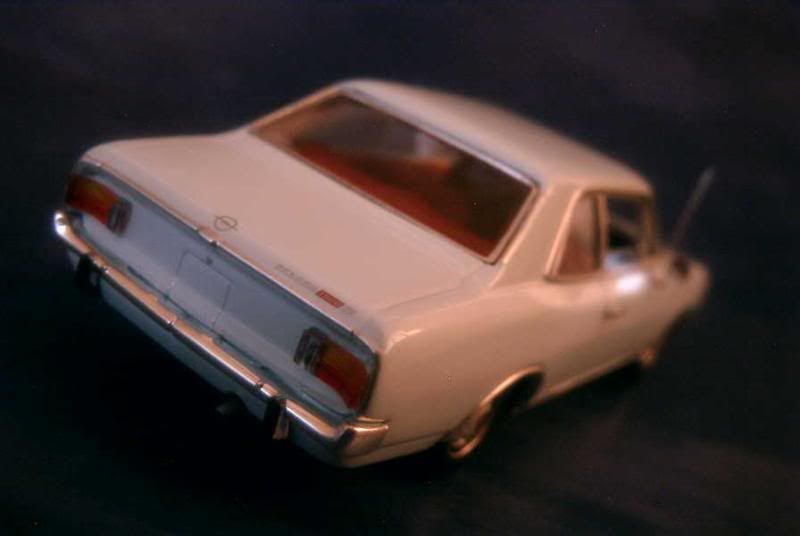
Model: Opel Rekord 1900
Year: 1966
Maker: Minichamps
Scale: 1/43
Distributed by: Minichamps, limited edition - 2,400 pieces
Acquired: brand new, in September 2007, in Manila, Philippines

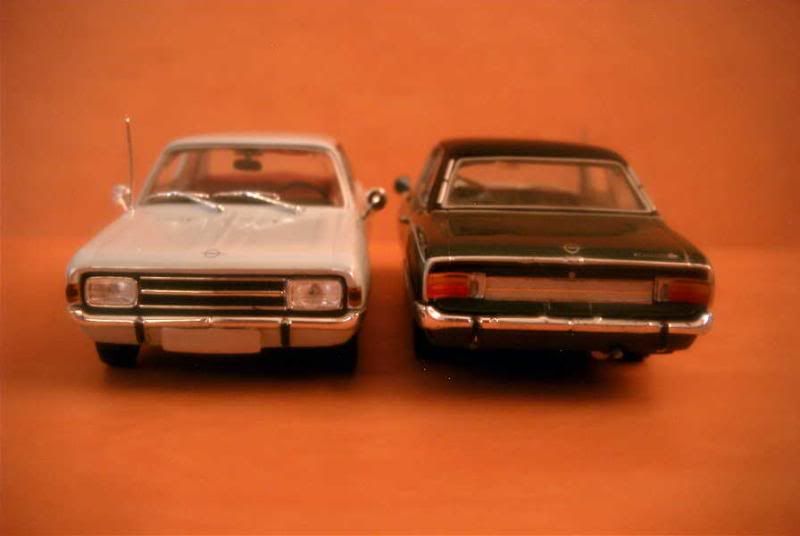
A pleasant Rekord “C” worth 14/20, though it appears a little “naked” without any registration plate.
Photobucket

Photobucket

Photobucket

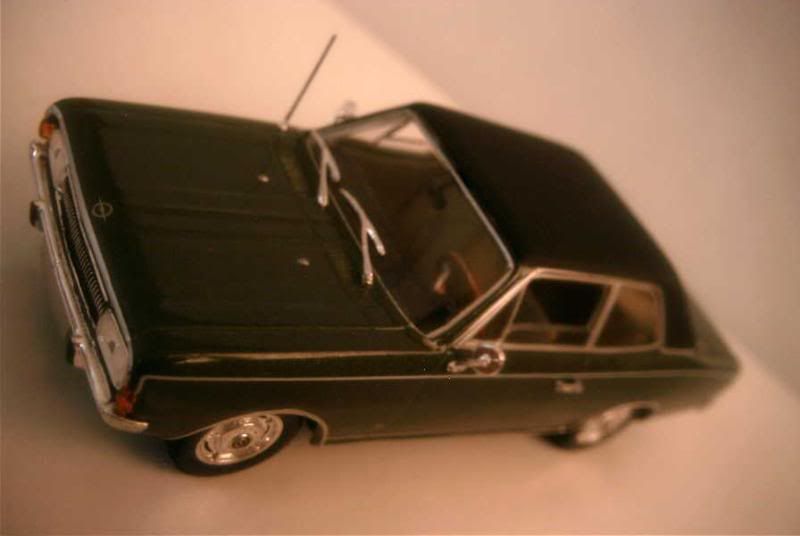
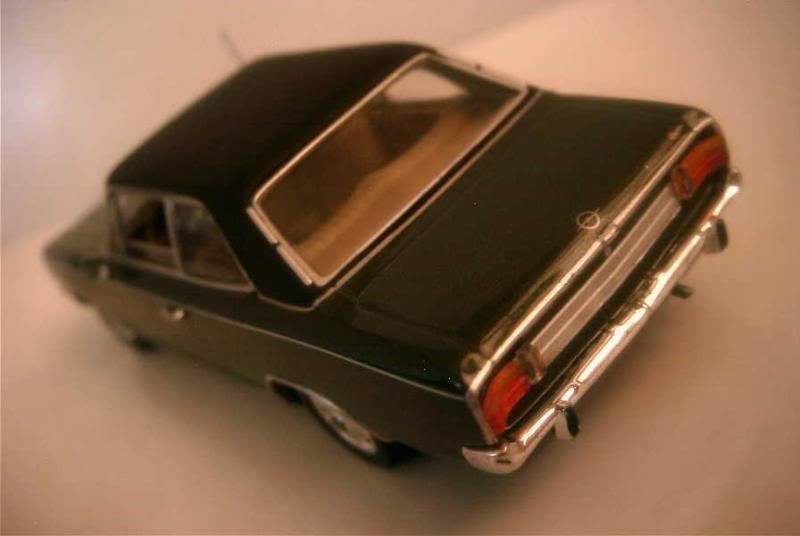
Model: Opel Commodore
Year: 1966
Maker: Minichamps
Scale: 1/43
Distributed by: Minichamps, limited edition - 4,320 pieces
Acquired: brand new, in February 2006, in Manila, Philippines

A fancier version of its Rekord gave Minichamps a Commodore. The German model-maker upheld its reputation by taking care of the minor details differentiating the two cars, as a different type of steering wheel for example. I'd give a 15/20 rating here.
Photobucket

Photobucket

Photobucket

September 17, 2009

Opel Kadett

A little history

After the name had been momentarily used before World War Two, the first modern Opel Kadett appeared in October 1962 as a boxy and very conventional popular car powered by a 1.0-litre engine. An instant success, the car appealing to the German motorists who wanted something else than the ubiquitous Volkswagen Beetle, this first-generation Kadett nonetheless didn’t last more than three years as, for model year 1966, a totally new Kadett was introduced. A lower, wider car, this new model extended the nameplate’s success to foreign markets. It also introduced a sporty Rallye version powered by a 1.9-litre, 106 hp engine.

The second-generation Kadett lasted much longer than the first, until it was replaced in 1973 by a modernized car carrying over most of its predecessor’s flair. The car’s success turned into a triumph when its production started all around the world, notably as the Vauxhall Chevette in England, the Isuzu Gemini in Japan, or the Chevrolet Chevette in the United States. The iconic Rallye was maintained in the range, and was joined by a new GT/E coupe.

The Kadett was at a crossroad when its fourth generation was unveiled in 1979. A compact and boxy front-wheel-drive hatchback, it was above all a family car devoid of any glamour. Though keeping the same character, the fifth and last Kadett, introduced in 1984, at least featured a pleasant styling, which was also one of the most aerodynamic of the time. It was built until 1991, when the Kadett was succeeded by the Astra.

(This car’s history will be expanded in due time, please be patient.)

About the model

Model: Opel Kadett GT/E
Year: 1975
Maker: Detail Cars
Scale: 1/43
Distributed by: Detail Cars, “Platinum” series
Acquired: brand new, in May 2005, in Manila, Philippines

Detail Cars produced this pleasing third-generation Kadett in its fastback coupe variant, both as a road car or a rally car. The moulds were taken over by Solido after the Italian brand’s demise. My rating is 13/20.

Photobucket

Photobucket

September 04, 2009

Cadillac Eldorado (1967-1978)

A little history

The Buick Riviera initiated a new class of cars, named “personal luxury coupes”, when it was launched in 1962. Three years later, it was joined by the Oldsmobile Toronado, which added the originality of front-wheel-drive, guaranteeing excellent handling to these powerful but heavy automobiles. For model year 1967, with no true competitor yet on this market, General Motors unveiled Cadillac’s version of the personal luxury coupe, the brand-new Eldorado.

Though the nameplate existed for the last fifteen years, up to then the Eldorado had always been closely related to the rest of the luxury carmaker’s range. The 1967 model would be totally different.

Based on the Toronado’s platform, the Eldorado retained its front-wheel-drive architecture, a first at Cadillac’s. Transmission was through a standard Turbo-Hydramatic gearbox. The engine was initially the same “429” (7.0-litre) which powered the rest of the range, but by 1970 the Eldorado’s displacement had been gradually raised to 500 cu.in. (8.2-litre) for 400 bhp, giving quite a load of muscle to the behemoth.

Styling, in which Bill Mitchell’s influence was visible, was neat and angular, without any visual clue connecting it to the other cars proposed by Cadillac. The Eldorado had been slightly downsized. Quad headlights were now horizontal and, when not in use, hidden behind the grille. Fender skirts disappeared for a lighter look. Furthermore, there was no 1967 Eldorado convertible – only a coupe, its long and low lines stretching over the pavement, was offered.

Despite a hefty price and the 1968 appearance of a worthy competitor, the Lincoln Continental Mark III, the Eldorado sold well. Despite this success, life expectancy was short in Detroit during those days, and a new Eldorado appeared for model year 1971. Though still a distinct car, its style could be now much easily related to other Cadillacs: visible quad headlights, vertical fins at the end of the rear wings, fender skirts and vinyl roof were all present, alongside a resurrected convertible. This somewhat plainer Eldorado sold equally well nonetheless but, by 1976, the American automotive landscape was about to be radically modified. Cadillac had already announced that the Eldorado convertible, condemned by changing trends and growing concern about security, would be the last of its kind. Gone too after that year was the huge 8.2-litre, replaced by a 7.0-litre which, in those times of gasoline scarcity, was only reasonable by comparison. Besides, the Eldorado would become some sort of dinosaur after 1976, when the rest of the range was downsized. This survivor’s final extinction came two years later, when a diet Eldorado was introduced for model year 1979. Sadly, the new vehicle retained only a part of the old car’s weight, but also a fraction of its glamour.

About the model

Model: Cadillac Fleetwood Eldorado
Year: 1973
Maker: Anson
Scale: 1/18 (apparently adjusted to the size of the box, see below...)
Distributed by: Anson
Acquired: brand new, in July 2003, in Brive, France

I once read a raving review of this model in a magazine. Are journalists receiving backhanders to write such nonsense or are some of them simply blind, I cannot say. I bought this model – fortunately discounted – in France. As soon as I put it onto its shelf when back in the Philippines, and therefore had a base for comparison, I noticed something was wrong. Time to look for the Eldorado’s dimensions, to measure my die-cast, and then to make a little computation and the deception was clear: Anson’s Eldorado isn’t in 1/18 scale, despite what can be written on the box, but in a perfect 1/21. As a result I got rid off this odd car by offering it to another collector not so strict about scale as I am… Quality was correct – nothing exceptional though – but the aforementioned little trick, annoying when credited to toy-maker New Ray but totally unacceptable from Anson, deserves a 7/20. Sorry for the poor quality of the pictures, which were taken years ago and, obviously, cannot be renewed any more.

Photobucket

Photobucket

Photobucket

Photobucket

Photobucket

August 14, 2009

Opel Manta

JDMike mentioned a short while ago the name of the Opel Manta, so here it is.

A little history

When Ford launched the Mustang, its success prompted General Motors to mimic its concept and create the Chevrolet Camaro. When Ford exported this idea to Europe and designed the Capri, GM again followed suit, unveiling the Opel Manta in 1970.

While the Capri had the mid-range Taunus as its base, the Manta was derived from the Ascona. The comparison didn’t extend to performance, though. While the Ford Capri could be equipped with anything from a plain 1.3-litre four to a 3.0-litre V6 and soon became a major contender in this form of motor sport, then rapidly gaining in popularity, that is known as touring car racing, the Opel Manta had to content itself with fours from 1.2 to 1.9 litre – its maker tried to fit a 2.8-litre V6 under the bonnet, but its prototype never gave satisfaction and this project of a “super-Manta” was simply dropped. The GM car compensated this handicap with sexy lines which recipe has been lost by the motor industry since then, a long bonnet ending with an aggressive face made of a pointed grille inserted between quad headlights, while the semi-fastback roofline ended at the rear with an inverted panel featuring round lights, à la Chevrolet Corvette.

The original Manta was built until 1975, when a redesigned Ascona brought a brand-new Manta. The car now looked squarish and plainer – just what customers seemed to appreciate by the late Seventies. Engine choice was identical. Despite a comparatively lesser appeal, this second-generation Mantas, passing through a mid-life facelift in 1982, had a much longer career than their predecessor, going into retirement in 1988. The most interesting version of the second Manta, and the most highly praised by collectors today, is the “400” developed for rally racing. A successor to the Ascona 400, the Manta 400’s career, though it can be considered successful, has been largely hampered by the emergence of the four-wheel-drive, turbocharged Group B cars.
About the model

Model: Opel Manta 400
Year: 1983
Event: 1983 Tour de Corse, driven by Guy Fréquelin, navigator Jean-François Fauchille (retired)
Maker: Ixo
Scale: 1/43
Distributed by: Altaya as no.55 of its Voitures de Rallye de Collection press series
Acquired: brand new, in May 2006, in Souillac, France

Simply correct, this model suffers from the same low level of detailing as other Altaya-distributed models of the time. I’d give a 11/20 rating to it.

I'll try to make more pictures as the second one appears blurred and, furthermore, I just noticed that the roof antenna is missing and needs to be glued back.

Photobucket

Photobucket

June 16, 2009

Vauxhall Viva

A little history

The General Motors’ British subsidiary was essentially a middle-class carmaker until 1963. In September that year was introduced the company’s first popular car in modern times, the Viva.

Though fairly different, the Viva, or HA as it was known internally, unmistakably looked much like its German relative, the Opel Kadett, then one year-old. As the Kadett, the Viva was a two-door saloon of very conventional design, fitted with a somewhat ungainly body – too short a front overhang, too long a rear overhang, at least to modern enthusiasts. Despite its extreme conservatism, the Viva was in a favourable situation by the time of its launch: its main competitor, the Ford Anglia, was by then an old car which inverted backlight, which had never caught on the public, was looking odder and odder as time went by.

With the HA receiving a warm welcome from the British motorists, Vauxhall decided not to rest on its laurels. Just three years after the initial Viva had been introduced, it already found a successor in the HB, a totally new car. Slightly bigger engines (a 1.2-litre four replaced the previous 1.1-litre) and a brand new suspension that promised fine handling weren’t much to appreciate for the public, who rather noticed the up-to-date design, an American-inspired “coke bottle” which replaced the extremely angular body of the former HA.

Its eternal rival Ford having made good of its privileged relationship with Lotus, which designed the sporty Ford Lotus Cortina for its partner, Vauxhall decided to do quite the same with its Viva HB, creating the Viva SL/90 Brabham. Well, no particular links existed between the Vauxhall company and the then-double Formula One champion Jack Brabham, which involvement in the car’s design was most probably limited to receiving a check in return for the use of his name, but this was still good publicity. For real performance though, the HB had to wait until the introduction of the 2.0-litre GT, which borrowed the engine of its bigger companion the Victor in February 1968.

It can hardly be avoided to mention that the HB formed the basis for the new Australian compact, the first generation Holden Torana. Designed to European standards, the Viva suffered “down under” and received much criticism. Holden had done a lot to adapt the car to local conditions nonetheless, even creating a four-door version… which bodies were sent back to England in order to build a new four-door Viva!

In 1970, the HB gave way to a brand-new Viva HC. Roughly similar in size and mechanical specs, the HC introduced an updated styling, which centre-bonnet hump, extending forward to the grille centre, made the car some kind of a European Pontiac. Furthermore, it was now available as a British-designed four-door saloon, but its estate variant still had only two doors. A large range of engines was available, up to a 2.3-litre four, though the highest-powered Vivas were sold as Magnum starting with the 1974 model year.

The Viva’s slow agony started in early 1975 when the Vauxhall Chevette, a hatchback saloon closely related to the Opel Kadett, was introduced. Despite being positioned lower in Vauxhall’s range, the Chevette ate up a large market share of the Viva. Unfortunately, the Chevette also pushed Vauxhall’s long-running love affair with rust to new extremities. Therefore, Vauxhall traditional customers seeking a popular car had the choice between an ageing model which wasn’t above reproaches regarding reliability, and a brand-new car soon known as a piece of junk. In the depressed British automobile industry scene of the late Seventies, Vauxhall was rather lucky to have the support of an international group as GM.

Production of the Viva HC was cancelled for the 1980 model year. By then it was the last “real” Vauxhall, as all models from the British company would be from then on, as the Astra which succeeded it, based on Opels. Unknown at this time, the Viva's disappearance marked the beginning of the end for the once lively British automobile industry.

About the models

Model: Vauxhall Viva
Year: 1966
Maker: Corgi
Scale: 1/43
Distributed by: Vanguards
Acquired: brand new, in December 2006, in Hong Kong, S.A.R.

Very correct model of a police Vauxhall HB, which notably enjoys Vanguards’ usual photo-etched wipers, a rarity in this price range, and a working suspension. Unfortunately, this later specification gives me some trouble as my model is terribly sagging on one side (I tried to hide this defect when I took the following pictures). Probably easy to fix, except Vanguards habit of cleverly hiding the chassis’ screws under removable chassis elements makes opening the model without breaking anything rather tricky when you aren’t familiar with this peculiar arrangement. I’d give 11/20 to this model, owing to its sorry factory defect.

Photobucket

Photobucket

Model: Vauxhall Viva SL/90 Brabham
Year: 1966
Maker: Corgi
Scale: 1/43
Distributed by: Vanguards
Acquired: second hand with neither stand nor box, in August 2007, through a friend from Shanghai, China

This Brabham version is basically the same car with a different paint job including a specific decoration. My rating is 13/20.

Photobucket

Photobucket

Photobucket

April 21, 2009

Chevrolet Captiva

A little history

Taking design cues from the S3X concept car presented by parent company Chevrolet, built on an extended version of the Saturn Vue’s platform, the Daewoo Windstorm appeared in 2006 as a 2007 model. General Motors’ strategy since its takeover of the South Korean company having been to limit the use of this brand to its native country, even if this SUV is widely exported it bears the name Chevrolet Captiva in most of the world, with the exception of Australasia where the car is rebadged as a Holden Captiva. A pretty large vehicle graced by a rather pleasant styling, the Windstorm/Captiva is powered by a 2.0-litre turbocharged diesel, a 2.4-litre four or a 3.2-litre V6.

(This car’s history will be expanded in due time, please be patient.)

About the model

Model: Chevrolet Captiva
Year: 2006
Maker: Norev
Scale: 1/43
Distributed by: Norev
Acquired: new with neither box nor stand (probably a production overrun or quality control reject), in January 2007, in Hong Kong, S.A.R.

Facing the choice of buying either the model of a vintage automobile or that of a brand new car, I’ll always go for the older one. Nevertheless no rule goes without exception and on the date I bought this Captiva there could have hardly been a newer model. My decision probably has something to do with the quality and care for details that Norev displayed to reproduce this SUV. There isn’t much complaints I could make so I’ll give this die-cast a 15/20.

Photobucket

Photobucket

April 18, 2009

Chevrolet Nova

A little history

The Nova was an upscale variant of Chevrolet’s first traditional compact car, the Chevy II, introduced after General Motors realized that the unconventional Corvair displeased a large fringe of its potential customers. Launched in 1962, the Chevy II was well-timed as the Corvair’s sales plummeted as a result of a not-fully-justified campaign against it by security-minded (and somewhat publicity-seeking) lawyer Ralph Nader, and absorbed most of the sales of its unfortunate companion, a happy development for General Motors which could have otherwise seen its customers flock to its competitors’ showrooms.

A second-generation Chevy II appeared for 1966, but retained a squarish look close to the one which graced its predecessor. In late 1968, a third-generation car was introduced for the 1969 model-year, which dropped the original “Chevy II” name in favour of the sole “Nova”. The range was also simplified, from then on concentrating on two-door coupes and four-door sedans.

One of the most desirable third-generation Novas were the Super Sport, or SS. Though this performance package had been introduced as early as 1963, the combination of a fresh, clean design and more-potent-than-ever engines made the SS an instant classic. I’ll refrain from calling the Nova SS a “muscle car” – those who know me can say why: I abhor using the “muscle car” name outside the strict intermediate class and, as the Nova is per se a compact, it doesn’t qualify as such. Whatever you call it, it is nothing more than a name anyway, and that the Nova SS was a great performance machine is what really matters. Lighter and nimbler than a genuine muscle car, the Nova SS, fitted in standard guise with a 350 (5.7-litre) V8 good for 300 bhp could really do good when its throttle was tickled.

Chevrolet knew the potential of its third-generation Nova, and built them for six straight model years until the end of 1974 – quite a long life for an American car of this era. Then a new Nova, the depressingly plain fourth-generation, was introduced. Production of the Nova was halted for good a few days short of Christmas 1978.

About the model

Model: Chevrolet Nova SS396
Year: 1970
Maker: Ertl
Scale: 1/43
Distributed by: Ertl, "American Muscle" series ref. 0889GD, sold as part of the set "Class of 1970" ref. 32003
Acquired: brand new, in June 2005, in Manila, Philippines

Ertl is certainly better known for its numerous 1:18 scale models rather than its 1:43s. That’s a shame, as models of American classics which are both well done and affordable are scarce in the smaller scale. This Nova SS comes as part of a three-car package which also includes a Ford Torino Cobra and an Oldsmobile 4-4-2. With a nice metallic green paint, good-looking wheels and specific badges fitted all around, the car definitely looks great. The only drawback is the windshield wipers, moulded with the windshield rather than added as separate parts. Still, not bad for a rather low price. My rating: 14/20.

Photobucket

Photobucket

Photobucket

Photobucket

Photobucket

April 10, 2009

Oldsmobile 88

A little history

The combination of a powerful overhead valve, over-square V8 with a relatively light and modern-looking body had made the Oldsmobile 88’s first generation an instant winner in 1949. The second generation, which appeared for model year 1954, followed the same recipe, and enjoyed the same success.

(This car’s history will be expanded in due time, please be patient.)

About the model

Model: Oldsmobile Super 88
Year: 1955
Maker: Welly
Scale: 1/26
Distributed by: Welly, "1:26 Collection"
Acquired: brand new, in August 2005, in Manila, Philippines

The first product from Welly I ever saw was a rather ordinary-looking toy. Just a few years have passed and this company already has an interesting range of good die-casts in 1:18, and a growing line of budget 1:25 models. This Oldsmobile belongs to the latter, though the necessity of fitting the model in a standard size of box had driven Welly into choosing a rather odd 1:26 scale. While many American cars of the time wore flashy two-, three- or even four-tone paint jobs, Welly opted for something slightly less ostentatious - solid black. Some might be annoyed by this choice, but I personally like it, as I guess whole shelves of pink convertibles aren’t necessarily representative of Fifties motoring. As most (all?) of Welly’s models in that scale the front wheels are fixed, so don’t try operating the steering wheel. Worse, the doors cannot be opened. Apart from this detail the model can be asserted as correct, though never very subtle. My rating is 11/20.

Photobucket

Photobucket

March 24, 2009

Isuzu Trooper

A little history

Isuzu broke into the then-burgeoning market of what we today call “SUVs” in 1981, thanks to the Trooper, a large and squarish part-time four-wheel-drive station wagon available in both two- and four-door versions. Though there was nothing particularly exciting about it, a character the car would retain throughout its life, it sold rather well, particularly in the United States where SUVs were slowly becoming fashionable. Furthermore, in a superb demonstration of badge-engineering, a field in which General Motors had become a master, Isuzu produced the Trooper for a variety of other manufacturers around the world.

In 1987, the little originality the car could had on the outside was wiped out by some folk with a pencil who drew five squares figuring the grille, the headlights and the turn signals – Isuzu called such a bold move a “facelift”. Four years later, the original Trooper was gone… but replaced by a new Trooper, larger and more powerful than the previous one, but as bland externally. Engines, which all felt until then within the 2- to 3-litre bracket, were now all above the 3-litre mark – once again, Isuzu had the American market in mind. On the other hand, the new Trooper retained the part-time 4WD transmission of its predecessor, which necessitated a full stop in order to engage the front axle.

The second-generation Trooper received two facelifts in 1997 and 2000, and these proved much more tasteful than the 1987 mess. Nonetheless, increased competition, the relative lack of interest from struggling GM towards Isuzu (which would ultimately end with the company complete withdrawal from the lucrative North American market) and nasty rumours about the car’s safety records all conspired against the Trooper. In Europe where it was sold as the Opel (or Vauxhall) Monterey, the car’s career was equally inglorious. Therefore, production was suspended in 2003 without a direct successor, though the car remained available for a few more years on some specific markets.

About the model

Model: Isuzu Bighorn Plaisir
Year: 2000
Maker: Rakachi
Scale: 1/43
Distributed by: Rakachi (Japanese market only)
Acquired: brand new, in December 2006, in Hong Kong, S.A.R.

“Aganus Jam - Rakachi”, spells the box. I identified the maker as “Rakachi”, but I’m still at a loss about what “Aganus Jam” refers to. This very box is rather funny, for the company has mimicked the style and the lettering used by Minichamps. The comparison stops here, though. Rakachi’s scale model of a Bighorn – a Trooper but in name – is rather crude, and for me is more reminiscent of Cararama than of any high-end industrial die-cast makers. The outside mirrors and the dashboard are simply hideous. Anyway, the model is rather original, and I paid it a fair price (about four and a half euros, quite a bargain). I won’t give more than 8/20 to it, however.

Photobucket

Photobucket

Holden FE, FC, FB and EK

A little history

For long Australians had wanted a real national car, but had to content themselves with imported British and American vehicles. An early attempt, the Southern Cross, went nowhere when its principal promoter, aviator Charles Kingsford Smith, disappeared during an attempt at a record flight between England and Australia, in November 1935. Holden, a GM subsidiary, finally took the honour of building the first Australian car in 1948. In a fashion similar to what we have seen regarding the Ford Vedette, the Holden 48/215 was based on an aborted project for a downsized post-war Chevrolet, though the Holden management’s initial desire was to design the car in Australia.

Eight years later, the bulbous silhouette of the original Holden had grown old. A brand-new automobile was launched in July 1956 and, once again, seemed like a standard American car in reduction. Engine was the same 2.2-litre inline six that was fitted to all Holdens since their introduction, but output was now up to 70 bhp. Named the FE, the new car sold so well that a brand-new factory had to be built at Dandenong, in Victoria state. Again following an American practice, Holden would retire its car after only six years in production despite many regular facelifts (May 1958, January 1960, May 1961) which gave birth respectively to the FC, the FB (note Holden’s strange habit of naming the successive generations of its car backward) and the EK. In fact, the finned and chromed-laden FB was virtually a new car.

By the end of the Fifties, thanks to this line of cars, Holden had come to dominate the domestic market – half of the new vehicles sold every year were built by the company. A new model, the sleeker EJ, was unveiled in July 1962, though the commercial vehicles based on it would wait until January 1963.

About the models

Model: Holden FE Business
Year: 1956
Maker: Ixo
Scale: 1/43
Distributed by: Altaya as no.25 of its Taxis du Monde press series
Acquired: new with neither box nor stand (probably a production overrun or quality control reject), in December 2006, in Hong Kong, S.A.R.

Here comes a taxi from Sydney. I actually suppose it's a Business, this mid-range trim being particularly popular with taxi operators. It's indeed an original car, but unfortunately Ixo did a really poor job when it tried to reproduce the car, which has a strange look, particularly in its rear half. I won't give it more than 7/20.

Photobucket

Photobucket

Model: Holden FC Special
Year: 1958
Maker: Trax
Scale: 1/43
Distributed by: Trax, "Opal" series
Acquired: brand new, in February 2007, in Shenzhen, China

When it comes to Australian cars reproduced in die-casts, Trax certainly is the reference. I'm glad I have purchased this one for much lesser than the whopping price usually asked. The model is splendid throughout. In addition to the front doors, the bonnet and the boot can be opened, the former revealing a nice - for such a small scale - engine. Though I'm not fond of opening parts in 1/43 scale, Trax has been able to adjust each and every one of them so well that nothing is visible when they're closed. Just great. Let's give a 16/20 to this little marvel.

Photobucket

Photobucket

Photobucket

March 21, 2009

Oldsmobile Toronado

A little history

Among all General Motors brands, Oldsmobile had long been the one best known for its sense of innovation. Modern automatic transmission through torque converter was an Oldsmobile first, while the short stroke V8 engines introduced right after World War Two ignited a crazed race towards ever more power and performances. In 1965, Oldsmobile was up to its reputation when it launched a front-wheel drive automobile.

Actually, front-wheel drive cars had already been built in the U.S., let alone abroad, but the last vehicle using such a technology in America, the Cord, had been discontinued almost three decades earlier.

Oldsmobile started toying with the idea of building a front-wheel drive car as early as 1958. Launching a mass-produced vehicle equipped with a technology that was new for its maker, and therefore not time-tested, would have been a risky gamble. The opportunity to build a smaller-volume automobile, and with it the possibility to advance from the experimental stage, arose during the early Sixties.

The original Buick Riviera was due to be replaced by a new vehicle for the 1966 model year, and General Motors, which was then expanding its personal luxury range, allowed Oldsmobile to venture simultaneously into this growing market. The Toronado – the name was taken from a show car presented a few years earlier – would be a close relative to the Riviera. This meant that the whole drivetrain of the Toronado would have to fit under the bonnet of a car similar in proportions to a conventional rear-wheel drive, in itself a tour de force. Engine was a 7.0-litre V8 “Rocket” taken from the top-of-the-line 98 range, with an output boosted to 385 bhp.

To match its mechanical originality the Toronado received an uncommon body, based on a design by David North. With its fastback profile, its peculiar wheel arches and long, sloping bonnet, which included retractable headlights sitting on top of a wide grille, Oldsmobile’s luxury coupe looked like nothing else on the American highways of the time.

After its introduction as a 1966 model, the Toronado received good reviews and won the coveted Car of the Year award from Motor Trend magazine. The handling was found to be particularly good, and not at all disturbing for American drivers used to conventional rear-wheel drive. Acceleration and top speed (the car could pass 215 kph) were extremely good. The main critic aimed at the brakes, Oldsmobile having chosen to fit its heavy coupe with drums on all four wheels, which proved highly inadequate.

On the commercial side the Toronado sold correctly, but nothing more. Starting in 1967, Cadillac competed on the same ground as Oldsmobile with its new Eldorado, which too was a front-wheel drive personal luxury coupe. Like all American cars at this time, the Toronado received yearly facelifts. For 1967, much-needed front disk brakes were added to the option list, while a new 7.5-litre engine good for as much as 400 bhp was adopted in 1968. Despite this increase in displacement and power the Toronado was being gradually shifted away from performances in favor of luxury alone. It was built until the end of the 1970 model-year, when a brand new “Toro” hit the market.

About the model

Model: Oldsmobile Toronado
Year: 1966
Maker: unknown
Scale: 1/43
Distributed by: definitely a Del Prado model, but curiously sold in a box by Universal Hobbies, from its "Eagle's Race" series. Could it be a production overrun by Del Prado which was taken over by Universal Hobbies, or more simply a mismatch between the model and its box?
Acquired: seemingly brand new, in December 2006, in Hong Kong, S.A.R.

Correctly made, at least when compared with other Del Prado models. The Italian company did well in chosing this particular car to reproduce, as its body is relatively simple and not as heavily ornate than other American automobiles of the era, thus limiting the risk of having it botched when reproduced in scale. Fitting standard blackwall tyres instead of the too-often-seen whitewalls is also welcomed. On the other hand its main problem concerns the wipers which have been molded with the windshield, instead of being separate parts. However, affordable reproductions of American cars are scarce in 1:43, so let's be content with this one, which is well worth a 12/20 rating.

Photobucket

Photobucket