January 28, 2012

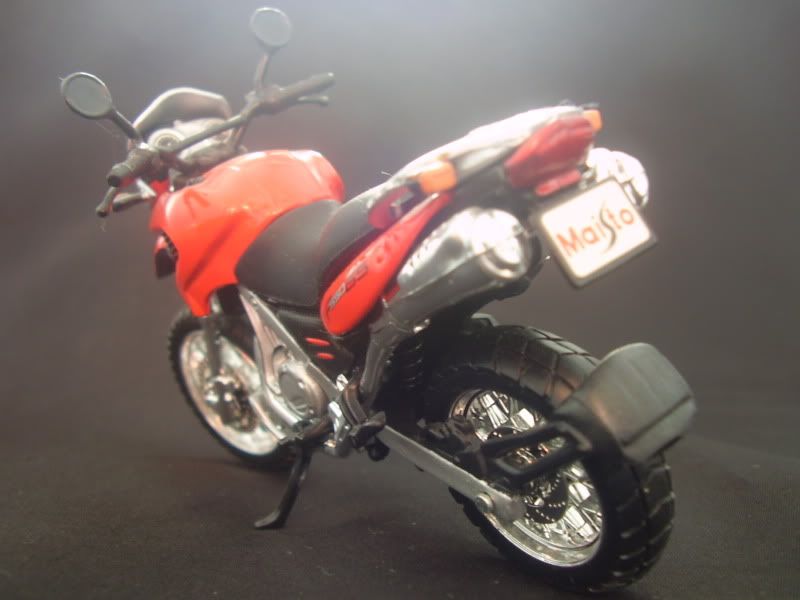
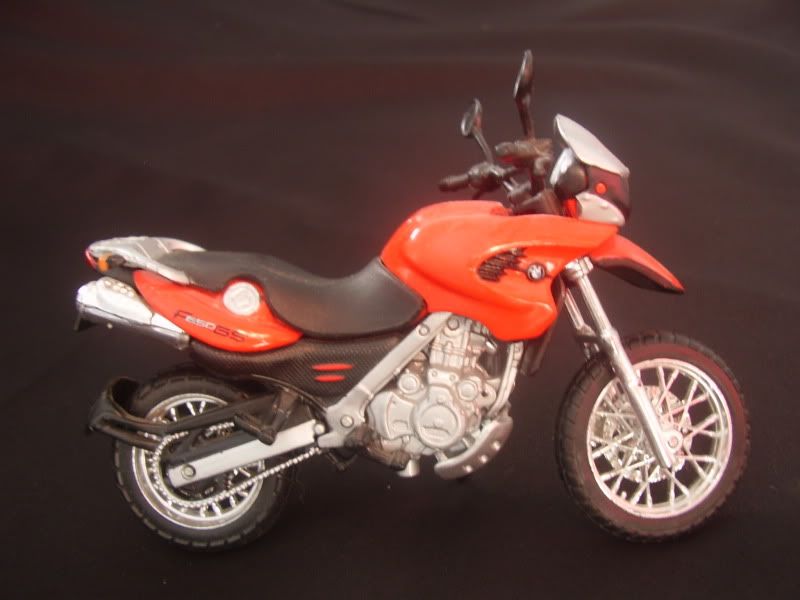
BMW F650

A little history

A rather elitist brand on four as well as on two wheels, BMW decided during the early Nineties to address a slightly less affluent and much younger clientele. In 1993, this willingness translated into the F650. Available in two versions, the Funduro and the ST, the F650 was powered by a single-cylinder 650cc Rotax rated at 50 hp. Both models were built until the end of 1999, when they were replaced by a single model, the F650GS. Fitted with an injection engine and a catalytic converter, the GS stood higher, yet had a lower centre of gravity thanks to a modified fuel tank.

At the end of 2007, BMW deeply updated its F650GS for the Milan motorcycle show. Since then, it has appeared as a simplified version of the new F800GS. A little odd perhaps, the F650GS actually shares its larger sister’s smoother 800cc engine. Once more provided by Rotax, it is an inline twin delivering 85 hp in F800 guise, but limited to 71 hp when fitted to the F650. Again designed for a public of bikers with limited experience, both GS models can also be restricted to a friendlier output of only 34 hp. They are still proposed by BMW today.

About the model

Model: BMW F650GS
Year: 2007
Maker: Maisto
Scale: 1/18
Distributed by: Maisto
Acquired: second hand with neither stand nor box, in December 2011, in Brive, France

A rendition of the F650GS that is well in line with what Maisto usually produces: nicely done overall but the high content of plastic parts sadly makes it look a little toy-like. My rating is 12/20.
Photobucket

Photobucket

Photobucket

January 24, 2012

Lamborghini Diablo

A little history

In 1985, Lamborghini decided to replace its most iconic automobile, the Countach. Temporarily dubbed Project 132, the new car was to reach 315 kph, establishing itself as one of the fastest cars in the world. On the outside, penning its body was entrusted once again to famed designer Marcello Gandini, to whom had been credited most Lamborghini designs up to then. Alas, development was slowed down by Lamborghini’s serious lack of funds. Having narrowly escaped a bankruptcy, the Sant’Agata company was still in poor shape by the Eighties. Then, Chrysler entered the stage. The American giant too had closely avoided its ruin, turning the tides around 1980 with successful vehicles such as the L-platform cars (Plymouth Horizon and Dodge Omni) then the K-Cars (Plymouth Reliant and Dodge Aries). Though it had just sold its many branches overseas, it was willing to add a little prestige to its name by investing the cash it had lacked for so many years into the purchase of a reputed European auto maker.

Lamborghini’s takeover took place in 1987, and though the Italian company lost its independence in the process, it insured that it would have sufficient budget to complete its Project 132. This was achieved, but not without having Chrysler’s management interfere with the car’s development. Marcello Gandini’s radically angular body displeased the American executives, so Chrysler’s designers drew a heavily modified body for the car, which ended up being much more curved and rounded than intended. Dismayed, Gandini left with his drawings and put them to good use to create the Cizeta-Moroder V16T.

The new Lamborghini finally appeared in January 1990 at the Detroit motor show, under the name Diablo. Though its engine was the well-known 5.7-litre V12, this time rated at 492 hp, the car exceeded its initial goal and could reach an impressive 325+ kph. Compared to the departing Countach, the Diablo was also designed to be a much more comfortable GT and not solely a performance-oriented machine, so it came with a long list of optional equipments, though the base model remained relatively spartan.

The early Nineties were a time of severe competition in the supercars field, with many projects from both established companies and newcomers. Lamborghini could not afford to wait too long to update its Diablo, which was done in 1993 with the introduction of the VT. The new variant enjoyed an all-wheel-drive transmission which was based on the experience gleaned from the LM002 off-road vehicle, a new suspension, improved brakes, a new dashboard and a wide array of minor modifications. The car came standard with air-conditioning but, surprisingly, still had to wait for an ABS system.

The Lamborghini Diablo’s range was widely augmented during 1995. The year saw the introduction of a long-awaited VT Roadster, and a new version fitted with a conventional rear-wheel-drive transmission, the SV. Finally, after Chrysler sold Lamborghini to the VAG group, the Diablo was facelifted, receiving a front end treatment that was somewhat reminiscent of the Bugatti EB110, ironically another Marcello Gandini creation. It also gained a V12 engine enlarged to 6.0-litre and good for 550 hp, and a modified all-wheel-drive transmission… which wasn’t necessarily an improvement over the previous version. Under this latest guise, the Diablo was produced until 2001, when it was succeeded by the Lamborghini Murciélago.

About the model

Model: Lamborghini Diablo
Year: 1990
Maker: Maisto
Scale: 1/18
Distributed by: Maisto
Acquired: second hand with neither box nor stand, in April 2007, in Brive, France

This is a correct yet inexpensive model of the Diablo. Nothing extraordinary about it, and furthermore the thick plastic-made harnesses fitted to the seats somewhat spoil the passenger compartment, but still worth a 13/20 rating.

Photobucket
Photobucket

Photobucket

Photobucket


Photobucket

Model: Lamborghini Diablo
Year: 1990
Maker: Bburago
Scale: 1/24
Distributed by: Bburago
Acquired: second hand with neither box nor stand, in April 2007, in Brive, France

This die-cast is simple, even toy-ish perhaps, but correct enough and extremely cheap. Bburago has always had a problem with the width of its tyres, which the Italian brand represents much too wide, but it’s obviously not really an issue with this particular model. My rating is 10/20.

Photobucket

Photobucket

Photobucket

Model: Lamborghini Diablo VT
Year: 1993
Maker: Del Prado, or whoever builds models for Del Prado
Scale: 1/43
Distributed by: Del Prado through an unknown Japanese press series
Acquired: brand new, in December 2006, in Hong Kong, S.A.R.

Del Prado has offered a surprisingly agreeable model of the Diablo – this cannot be said of all die-casts proposed by the Italian distributor. This effort is certainly worth 12/20.

Photobucket

Photobucket

Photobucket

Photobucket

January 20, 2012

A few updates

During my trip back to France I photographed a few die-casts that I haven’t still brought to Manila to join the rest of the collection. Some reproduce car models that I already mentioned here, as this Alpine A108 for example. Here is a sample, but you can click on the link just above to see all the new pictures:

Photobucket

My second update regards once again an Alpine, but the much more recent A310 this time. When this particular version was built in 1981, it had already gained a V6 engine and was then trying its luck – rather unsuccessfully – on the GT market.

Photobucket

The third instalment of my updates goes to Chaparral. Though I had with me in France all I needed to take proper pictures, I didn’t bring along the necessary tools to deal with the devilish screws designed by Ixo, so many models have remained boxed in the meantime...

Photobucket

Among the models taken on camera was this Citroën CX, an early toy of mine that had never imagined, after so many years, ending up in a collection!

Photobucket

Though not exactly a new model, I also took better pictures of the eye-catching Indian Chief to add to those already presented earlier.

Photobucket

I was quite surprised to learn that I already did a post about the Schlesser Buggy – here is a much larger 1/24 model to add.

Photobucket

In addition to this, I made corrections to the recent post about the SS Jaguar SS1. I have always been confused about the adoption of the Jaguar name for the SS Cars’ models, that is, until a few weeks ago – and just after writing this post, obviously – when reading an article in an old issue of Collectible Automobiles taught me that Swallow’s management decided to use this name in 1935, a decision that was effective the following year. Therefore, the SS1 has never been called a Jaguar during its production run. Consequently the post is now more accurately named SS Cars SS1, though I retained the convenient “Jaguar” label for it.

January 17, 2012

Suzuki Hayabusa

Belated Happy New Year to you all, and welcome back!

A little history

There has been a time when a 750cc bike could be considered large and powerful. But as the Nineties dawned, announcing a struggle of huge proportions for the title of the fastest production motorcycle in the world, the big bikes of yesterday would soon be dwarfed by the modern giants.

By the late decade, the record stood in the hands of Honda, which CBR1100XX Super Blackbird could reach an astonishing 290 kph. “It’s not your father’s Honda”, to paraphrase a famous automotive slogan. That was at this moment that Suzuki entered the fray.

Admittedly, its GSX1300R wasn’t, in the early stages of its development, intended to set a world record. But from the moment it was decided to adopt a 1300cc inline-four engine, the largest block ever fitted to a sport motorcycle, the company’s engineers felt the title could be at hand. The new bike was introduced in 1999 under the name Hayabusa (“peregrine falcon”) – incidentally, this has already been the name of Japan’s most successful fighter aircraft of World War Two, the Nakajima Ki-43. With as much as 173 bhp, a rather light weight and a very sleek design, the Suzuki Hayabusa broke the symbolic 300 kph barrier and, setting a 312 kph mark, crushed its competitors.

In spite of being a remarkable machine, the Hayabusa caused controversy. First of all, the public was split over its peculiar look. Keyword during its development had been efficiency, not beauty. As it turned out, the Hayabusa announced the way most subsequent motorcycles would look like. More serious was the stir created by the escalating race between manufacturers to produce the fastest production motorcycle. Could it be really wise to let such machines roaming on open roads? Anticipating a negative reaction from the authorities of several countries, and possibly even a ban on such “hyper-sport” motorcycles, the various companies involved decided to declare a ceasefire and limit the top speed of their machines to “only” 300 kph. The Hayabusa respected the terms of this agreement from model year 2001, and was produced as such until the end of 2007, without much modification.

For model year 2008, Suzuki launched a new Hayabusa, which is actually more of an evolution of its predecessor. The controversial appearance of the first generation was by then much better accepted, so the second GSX1300R kept a similar look, though being entirely redesigned on the outside. On the mechanical side, the same engine was retained, albeit in a heavily reworked form displacing 1340cc and capable of a claimed 197 bhp. This obviously had no impact on top speed, but improved acceleration and other performances. The new Hayabusa was complemented by a new “naked bike” built around the 1340cc engine, the B-King. Production of these two models continues at time of writing.

About the model

Model: Suzuki GSX1300R-X Hayabusa
Year: 1999
Maker: Maisto
Scale: 1/18
Distributed by: Maisto
Acquired: second hand with neither stand nor box, in December 2011, in Brive, France

Excellent model among a very wide range of 1:18 motorcycles offered at quite a low cost by Maisto. This GSX1300R sports an elegant copper-silver paint scheme flanked by the traditional “Hayabusa” ideogram. My rating is 14/20.

Photobucket

Photobucket

Photobucket

Photobucket

December 14, 2011

SS Cars SS1

Here is a post Gaucho Man should enjoy. By the way, it will be the last one for the year, as I’ll be away during the Christmas season. See you back half-way through January, and advance greetings to all of you! :)

A little history

I suppose that there is no need to go through the early years of what would become Jaguar once more. How two friends, William Lyons and William Walmsley, set up the successful Swallow company building sidecars for motorcycles, then ventured into coachbuilding by fitting new sporty bodies to the plebeian Austin Seven has been told over and over again. Then, nine years into existence and carried by its initial successes, their company, Swallow, unveiled its very own car during the 1931 London Motor Show: the SS Cars SS1. Actually, Standard was responsible for a large share of the new model’s input, designing its chassis and providing its engines. Displacing 2100 or 2600cc, those couldn’t allow tremendous performance but the SS1 was in line with all previous Swallow products: it was an elegant and affordable sports car. The concept proved a winning one, 4200 copies of the SS1 being built until 1936. Among those, of particular mention is the striking Airline coupe, launched in 1934 and of which 624 were made. Interestingly, though it is the best remembered SS1 today, the Airline had been inspired by Walmsley but was disliked by Lyons. This wasn’t the only point on which the two partners couldn’t agree. Walmsley was satisfied enough with Swallow’s success, while Lyons only had expansion in mind. In the end, Walmsley gave up and sold his shares to Lyons in 1935. Under the latter’s guidance, SS would continuously develop: after a 1935 reorganization that saw the Swallow sidecars activities being separated from the SS automobile ones, then completely sold ten years later, SS changed its name to Jaguar, which would soon unveil the famous XK120 and enter the racing scene with the C- then D-Types. Lyons would remain at the helm of his company until 1972, designing most of its cars in the process, up to the legendary Jaguar XJ6. He would peacefully die in 1985.

About the model

Model: SS Cars SS1 Airline coupe
Year: 1935
Maker: Ixo
Scale: 1/43
Distributed by: Altaya as no.39 of its Voitures Classiques press series
Acquired: brand new, in May 2007, in Souillac, France

A simple - not many separate parts and, in this Altaya version, wheels that are a little too thick - yet elegant rendition of the famed SS1. My rating is 13/20.

Photobucket

Photobucket

Photobucket

Photobucket

Photobucket

December 05, 2011

Renault Fuego

First of all, a warm welcome to C.G. Michaels, our newest follower. Many among our most recent friends come from Argentina though, so today I’d like to discuss a car they know quite well.

A little history

As the Renault 15 and 17 coupes were based on the popular saloon, the Renault 12, the French company logically decided after the replacement of the latter by the Renault 18 to introduce a brand new coupe derived from the newest car. Tastefully penned by Michel Jardin under supervision by Robert Opron, it would receive Fuego as a name.

Production of the Fuego started in October 1979, replacing the R15/17 at Renault’s Maubeuge factory. Introduction would wait until March 1980 and the Geneva motor show. Most of the critics at the time concentrated on the styling. Not that it wasn’t elegant enough – on the contrary – but some judged that the new Renault unfortunately looked too similar to the Porsche 924, noticeably sharing the same concept of a rear opening glass “bubble” hatch. Furthermore, the Fuego, a much more modest car than the German machine, suffered from the comparison. On the road, the Fuego enjoyed a safe and predictable behaviour, a characteristic unsurprisingly shared with the R18. Alas, it also shared its engines, with no performance version initially offered. But in the end, the biggest problem the Fuego had to face was the fact that it simply came too late on the market. The concept of a coupe based on a mid-range saloon, powered by a large selection of engines, had been invented by the Ford Mustang then transposed to Europe by the Ford Capri. The large success that the cars designed for that niche enjoyed throughout the Seventies was quickly vanishing due to the fierce competition offered by the compact GTIs, a concept inaugurated by the Volkswagen Golf.

Renault tried to improve the performances of the Fuego by grafting to it more potent engines: a 2.0-litre block came first for model year 1981, but the car had to wait two more years for an able 1.6-litre turbocharged engine, with which it could finally reach 200 kph. That was a pity, as the Fuego had a particularly slick body ideal for high speeds. Several of its equipments were quite advanced for the time, too. Such was the case of the onboard computer, the remote door lock system (a world first, that today probably equips any single new car sold in the world) or the turbo-diesel engine, common nowadays on coupes, but an ultra-rare choice back then.

All these efforts were to no avail to save a car that was born too late. Though the Fuego cannot be called a failure, it was quickly withdrawn from production in Europe, being built until 1985 in France and 1986 in Spain. Due to the totally different specificities of the local market, the Fuego enjoyed a much longer career, and comparatively a much more successful one, in Argentina where the very last car was constructed as late as in 1992.

About the model

Model: Renault Fuego GTL
Year: 1981
Maker: Norev
Scale: 1/43
Distributed by: M6 as no.16 of its Renault Collection press series
Acquired: second hand with neither stand nor box, in July 2006, in Brive, France

Norev offers this interesting but rather old reproduction of the Renault Fuego. It is quite correct but is betrayed by its simple and poorly adjusted wheels and simplistic front end. I’d give 11/20 to this model.

Photobucket

Photobucket

Model: Renault Fuego GTX
Year: 1982
Maker: Ixo
Scale: 1/43
Distributed by: Altaya as no.89 of its Nos Chères Voitures d'Antan press series
Acquired: brand new, in October 2007, in Souillac, France

Ixo’s version of the Renault Fuego is greatly helped by the fact that it is much more recent than Norev’s version. Alas, it suffers from poor adjustment of some parts - have a look at these large black lateral pieces to see how they poorly fit. This unfortunately brings my rating down to 12/20 when it could have been much higher.

Photobucket

Photobucket

Photobucket